A Day in the Life of an Engineering Student at University of Campania Luigi Vanvitelli: Real Indian Student Experience
Stepping off the train at Caserta station for the first time, I felt a mix of nerves and excitement that most Indian students experience when moving abroad. Coming from a background where engineering often means a gated campus and a rigid schedule, my first few weeks of engineering student life University of Campania Luigi Vanvitelli Caserta & Naples Indian students were an absolute eye-opener. The University of Campania Luigi Vanvitelli isn’t just a place of study; it is woven into the very fabric of two distinct, vibrant cities. Whether you are navigating the royal grandeur of Caserta or the historic energy of Naples, every day feels like a masterclass in both technical precision and Mediterranean culture.
For parents and students researching engineering in Italy, the University of Campania Luigi Vanvitelli offers a unique dual-city experience. With a QS World University Ranking between 601–650, it provides high-quality education in branches like Civil, Aerospace, and Computer Engineering at some of the lowest costs in Europe. This is my honest account of what it’s actually like to live and study here.
First Impressions of Caserta & Naples as an Indian Engineering Student
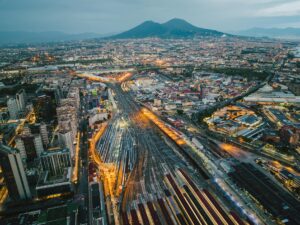
The “dual-city” structure of the university is its most defining feature. Most engineering departments are situated in Caserta, known for the magnificent Royal Palace (Reggia di Caserta), which is often called the “Versailles of Italy.” Life in Caserta is quieter, highly affordable, and very student-friendly. However, the connection to Naples—a vibrant, culturally rich seaport city—is seamless. I quickly learned that while Caserta is where I focus on my CAD designs, Naples is where I go for the best seafood and historic walks.
What surprised me most vs. my expectations back in India was the sheer freedom. In Italy, you are treated like an adult and a future colleague. The climate is Mediterranean—sunny and warm for most of the year—which felt much more like home than I expected. Moreover, the cost of living in Italy is significantly lower in the Campania region compared to northern cities like Milan or Turin, making it a practical choice for Indian families.
A Typical Bachelor’s Year 1 Day
Morning — Core Lectures (Maths, Physics, Computing)
My day usually starts at 7:00 AM in my shared apartment in Caserta. After a quick breakfast, I walk to the campus. Morning lectures start around 8:30 or 9:00 AM. In the first year, the focus is heavily on the “building blocks”: Mathematics (Analisi), Physics, and Computer Science. These are held in large lecture halls where the atmosphere is formal but the professors are incredibly knowledgeable. Unlike the rote learning I was used to, the focus here is on the mathematical “why” behind every formula.
Afternoon — Lab Sessions & Tutorials
After a quick lunch at the university canteen (Mensa)—where you can get a full Italian meal for a few euros—I head to the labs. Afternoon sessions are more hands-on. Whether we are working on basic circuit design or introduction to coding, the focus is on applying the morning’s theory. Tutorials are also common here, where teaching assistants help us solve complex problem sets in smaller groups.
Evening — Group Projects & Self-Study
By 5:00 PM, I usually head to the university library or a local cafe. Engineering at Vanvitelli is highly collaborative. I usually meet with my “colleghi” (classmates) to work on group projects. We use this time to share notes and prepare for the oral exams, which are a major part of the Italian system. I usually head home by 8:00 PM to cook some familiar Indian food, which is a great way to de-stress.
A Typical Master’s Year 1 Day
Morning — Advanced Specialised Lectures
For Master’s students, the schedule is more specialized. If you are in Aerospace or Industrial Engineering, your mornings are filled with advanced topics like Fluid Dynamics or Robotics. The classes are smaller than Bachelor’s, allowing for much more interaction with the faculty. We often discuss real-world case studies and recent research papers.
Afternoon — Research Lab / Industry Project
The University of Campania Luigi Vanvitelli is very dynamic in its research approach. Many Master’s students spend their afternoons in specialized research labs. I might be working on a simulation in MATLAB or ANSYS, or collaborating on a project linked to a local industrial partner. The university has strong ties to the regional aerospace and automotive sectors, which is vital for career prospects.
Evening — Thesis Research & Internship Applications
Master’s life is also about looking ahead. Evenings are often dedicated to thesis research or scouring the university’s career portal for internships. Many Indian students also use this time to check their scholarships in Italy status or look for part-time work opportunities to support their living expenses.
Weekly Schedules
Bachelor’s Schedule
| Day | Morning (08:30 – 13:00) | Afternoon (14:00 – 17:30) | Evening (18:00 onwards) |
|---|---|---|---|
| Monday | Mathematical Analysis I | Computer Science Lab | Self-Study / Library |
| Tuesday | Physics I (Mechanics) | Problem-Solving Tutorial | Indian Student Meetup |
| Wednesday | Chemistry for Engineers | Free / Self-Study | Sports / Social Life |
| Thursday | Linear Algebra | Physics Lab Session | Group Project Work |
| Friday | Technical Drawing | Review Session | Weekend Planning |
| Saturday | Revision / Notes Prep | Rest / Hobby | Dinner in Naples |
| Sunday | Rest | Grocery Shopping | Meal Prep for Week |
Master’s Schedule
| Day | Morning (09:00 – 13:00) | Afternoon (14:00 – 18:00) | Evening (18:30 onwards) |
|---|---|---|---|
| Monday | Advanced Fluid Dynamics | Research Lab Project | Thesis Drafting |
| Tuesday | Structural Mechanics | Industry Tie-up Meeting | Italian Language Class |
| Wednesday | Control Systems | Software Simulation (ANSYS) | Networking / Events |
| Thursday | Aerospace Materials | Specialized Workshop | Internship Search |
| Friday | Robotics & Automation | Lab Data Analysis | Evening in Caserta |
| Saturday | Project Documentation | Personal Research | Social Gathering |
| Sunday | Rest | Exploration (Campania) | Weekly Planning |
Academic Culture at University of Campania Luigi Vanvitelli
Project-Based Assessment
One of the biggest shifts for Indian students is the emphasis on projects. While there are final exams, many courses require you to submit a technical project or report. This ensures you actually know how to use the tools of the trade, not just memorize the textbook.
Italian Oral Exam Tradition
The “Esame Orale” can be intimidating at first. In many subjects, after passing a written test, you must sit for an oral exam with the professor. They will ask you conceptual questions to gauge your depth of understanding. It tests your communication skills—a vital asset for any engineer.
Collaborative Culture
You cannot survive engineering in Italy alone. You need your “colleghi.” Students here are very helpful, sharing past exam papers (compitini) and study tips. This collaborative spirit makes the rigorous workload much more manageable.
Direct Professor Access
Professors here are very accessible. They have dedicated “Ricevimento” (office hours) where you can go to ask questions. They appreciate students who are inquisitive and show a genuine interest in the subject.
Labs & Equipment at University of Campania Luigi Vanvitelli
The facilities here are impressive, especially considering the affordable tuition fees. The School of Engineering provides access to high-end workstations and software that are essential for modern engineering. Indian students often find themselves using equipment that might only be available in top-tier institutes back home.
- CAD/CAM & 3D Printing: Advanced labs for mechanical, aerospace, and industrial design.
- Simulation Software: Full access to MATLAB, ANSYS, and specialized computing environments.
- Specific Poles: The university has dedicated facilities for Civil, Environmental, Computer, Industrial, and Aerospace engineering across its Campania campuses.
- Innovation Centers: Support for student-led business initiatives and research commercialization.
Social Life in Caserta & Naples
Life isn’t just about the library. The “dual-city” experience means you have two different vibes to explore. Caserta is perfect for a relaxed evening walk around the Royal Palace gardens, while Naples offers a bustling nightlife and world-famous street food. There are several engineering clubs and hackathons where you can meet like-minded students.
The Indian student group in Campania is growing. We often organize small get-togethers, especially during festivals like Diwali or Holi. On weekends, many of us take the train to explore nearby gems like Pompeii, the Amalfi Coast, or even a quick trip to Rome. Split campus across Caserta and Naples means students enjoy the best of both worlds—quiet study areas and vibrant city life.
Balancing Studies + Social Life + Part-Time Work
Finding a balance is key. The academic workload is heavy, and the Italian system requires consistent effort. However, with an Italy student visa, you are allowed to work up to 20 hours per week. Many Indian students take up part-time roles in the service sector or as English tutors to help cover their personal expenses. Managing these hours requires strict time-blocking—treat your study hours like a 9-to-5 job so you can enjoy your weekends and work hours guilt-free.
FAQs
1. Is the medium of instruction entirely in English?
The university offers several Bachelor’s and Master’s programs entirely in English, specifically designed for international students. However, learning basic Italian is highly recommended for daily life and social integration.
2. How much does it cost to live in Caserta vs. Naples?
Caserta is generally more affordable than Naples, especially regarding rent. On average, an Indian student can manage with 500–700 Euros per month, covering rent, food, and transport.
3. Are there scholarships available for Indian engineering students?
Yes, students can apply for the DSU (Regional) scholarships provided by the Campania region, which can cover tuition fees and provide a yearly stipend and free canteen meals.
4. How do I travel between the different university poles?
The campuses are well-connected by regional trains and buses. The commute between Caserta and Naples is about 35–45 minutes by train, which is very frequent.
5. Can I work in Italy after my engineering degree?
Yes, international students can extend their stay with a “permesso di soggiorno per ricerca lavoro” (job-seeking permit) for up to 12 months after graduation to find a job related to their field.
6. What is the intake period for University of Campania Luigi Vanvitelli?
The primary intake is in September/October. Application windows usually open early in the year, so it’s best to check the universities portal early.
7. Is the University of Campania Luigi Vanvitelli degree recognized in India?
Yes, degrees from Italian public universities are globally recognized and highly regarded, allowing you to pursue further studies or jobs in India and abroad.
Want to Study Engineering at Vanvitelli in Caserta & Naples?
Navigating the application process, visa requirements, and scholarship deadlines can be complex. At ISC, we specialize in helping Indian students achieve their dreams of studying in Italy. Whether you need help with your engineering in Campania application or understanding the Italy student visa process, we are here to guide you.