A Day in the Life of an Engineering Student at University of Florence: Real Indian Student Experience
Deciding to study abroad is a massive step, especially for us coming from India where the academic structure is so deeply ingrained in our culture. When I first looked at the University of Florence (UniFI), I was drawn by the history of the city, but as an engineer, I needed to know if the engineering student life University of Florence Florence Indian students experience was actually worth the transition from a traditional Indian campus. Now that I am here, living in the heart of Tuscany and attending lectures in historic villas, I can tell you that it is a world apart from anything you will find back home.
Florence is famously known as the cradle of the Renaissance, but for an engineering student, it is also a hub of innovation. Whether you are aiming for engineering in Florence or looking at the broader scope of engineering in Italy, the University of Florence offers a unique blend of heritage and high-tech research that shapes you into a global professional. In this guide, I’ll take you through my typical day, the academic rigour, and how we manage our budget and social life in this stunning city.
First Impressions — What Indian Engineering Students Say About University of Florence
The first thing that hits most Indian students is the campus layout. Unlike Indian IITs or private universities that have one massive gated campus, the University of Florence is integrated into the city itself. The Faculty of Engineering is primarily located at the Santa Marta Institute, housed in Villa Cristina—a 14th-century building that looks more like a palace than a college. Walking into a lab that has Renaissance architecture on the outside and high-end MATLAB clusters on the inside is an incredible feeling.
Parents often worry about the “seriousness” of the curriculum. Let me assure you, the academic standards are high. Italian engineering degrees are world-renowned for their theoretical depth. Indian students often find the first few months a bit of a culture shock because of the “Oral Exams” system, but the collaborative environment and the sheer amount of industry-linked projects soon make you feel at home. There is a strong sense of community here, helped by the growing number of Indian students who share everything from apartment leads to the best places to find Basmati rice.
A Typical Bachelor’s Year 1 Day
The first year of a Bachelor’s degree in Italy is often called the “filter year” because it is designed to build a rock-solid foundation in core sciences. If you are coming from a CBSE or ICSE background, you will find the topics familiar, but the depth is significantly greater.
Morning — Core Engineering Lectures (Mathematics, Physics, Computer Science)
My day usually starts at 7:00 AM in my shared apartment near the city centre. After a quick breakfast, I catch the Bus 55, which drops me right at the “Scuola di Ingegneria” stop at Santa Marta. Lectures usually start at 8:30 AM. In the morning, we dive into heavy subjects like Calculus or Physics. The professors here are very approachable, but they expect you to have done your pre-reading. The lecture halls are grand, often with high ceilings and large windows overlooking the Florentine hills, which definitely helps when you’re trying to wrap your head around complex fluid dynamics!
Afternoon — Lab Sessions & Tutorials
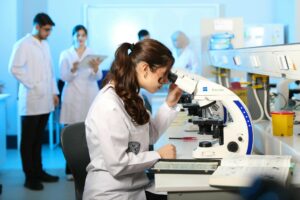
After a quick lunch at the “Mensa” (the student canteen where you can get a full Italian meal for a very subsidised price), I head to the labs. For Computer Engineering students, this might mean the Information Engineering (DINFO) labs. If you are in Mechanical or Civil, you might be working with CAD software or structural modelling tools. The afternoon is all about application. Unlike the rote learning that sometimes creeps into Indian education, the tutorials here focus on problem-solving. We spend hours in the “ex-Forno” teaching laboratory or the various computing clusters working through real-world datasets.
Evening — Group Project Work & Self-Study
By 5:00 PM, formal classes usually wind down, but the day isn’t over. Most of us head to the Library of Technological Sciences at Santa Marta. This is where the “collaborative culture” really shines. You’ll find groups of Indian, Italian, and international students huddled over laptops, working on group builds or design projects. We usually wrap up by 7:30 PM. If it’s a Tuesday, I might stop by a local grocery store to pick up ingredients for a communal Indian dinner with my flatmates.
A Typical Master’s Year 1 Day
Master’s life is significantly different. It is much more research-focused and specialized, especially for those in programs like Biomedical, Electronic, or Industry 4.0 related branches.
Morning — Advanced Specialised Lectures (smaller groups, greater depth)
Master’s lectures are often held in smaller rooms, allowing for a seminar-style environment. We might be discussing Microelectronics Systems Design or Advanced Signal Processing. The focus is heavily on the “state-of-the-art” in the ICT or industrial sectors. Since UniFI is highly ranked for research, many of our professors are actively leading EU-funded projects, and they often bring that real-world data into the classroom.
Afternoon — Research Lab Session or Industry Project
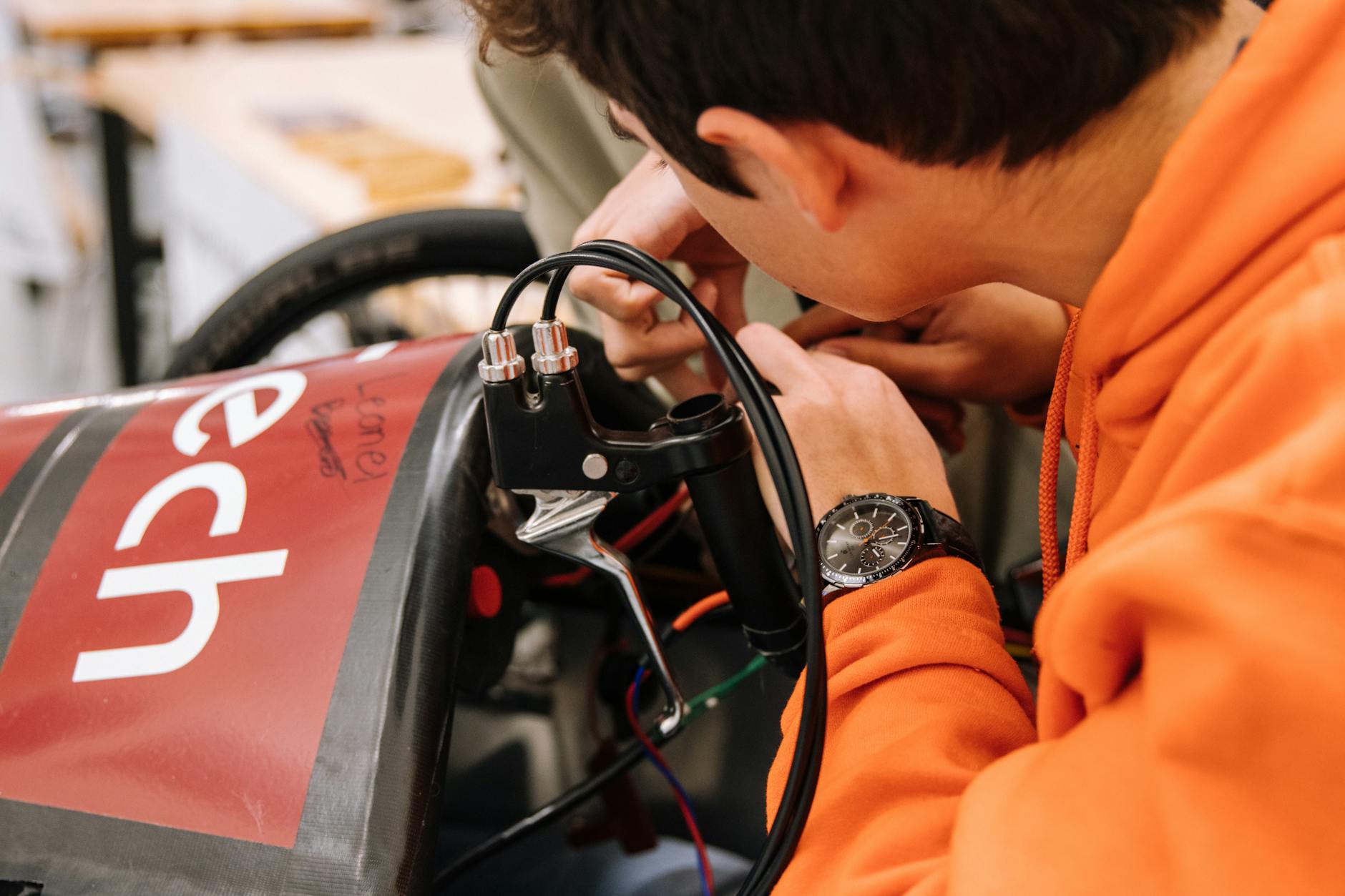
This is my favorite part of the day. Master’s students have access to specialized labs like the AI Lab “Giovanni Soda” or the Systems & Control Lab (SysCon). If you are lucky enough to be part of the “Florence Race Team,” you might spend your afternoon designing components for a racing car. Others might be at the Morgagni Teaching Complex, working on biomedical sensors. The university has strong ties with companies like GE Oil & Gas (Nuovo Pignone) and various high-tech startups in the region, so many afternoon sessions are actually project meetings for industry-sponsored research.
Evening — Thesis literature review, internship applications
Master’s students are always thinking about the next step. Evenings are often spent in the library or a quiet cafe, scouring journals for thesis topics or applying for internships via the university’s career portal. Italy offers a “Post-study work permit” (Permesso di Soggiorno per attesa occupazione), so we use this time to build our network and polish our portfolios for the European job market.
Weekly Schedule — Bachelor’s Year
The schedule for a Bachelor’s student is quite structured, allowing for a steady rhythm of study and life.
| Day | Morning | Afternoon | Evening |
|---|---|---|---|
| Monday | Mathematics I Lecture | Physics Lab | Self-study at Library |
| Tuesday | Physics I Lecture | Computer Science Tutorial | Indian Student Meet-up |
| Wednesday | Computer Science Lecture | Calculus Problem Class | Project Group Meeting |
| Thursday | Mathematics I Lecture | Chemistry for Engineers | Part-time Work / Study |
| Friday | Physics I Lecture | Technical Drawing (CAD) | Weekend Planning |
| Saturday | Revision & Assignment | Social Activity in Florence | Personal Time |
| Sunday | Rest / Cultural Visit | Meal Prep for Week | Reviewing Next Week’s Schedule |
Weekly Schedule — Master’s Year
The Master’s schedule is more flexible but requires intense self-discipline, especially with the increased lab hours.
| Day | Morning | Afternoon | Evening |
|---|---|---|---|
| Monday | Advanced Specialisation Lecture | Research Lab Session | Literature Review |
| Tuesday | Industry Seminar / Guest Visit | Project Development Lab | Thesis Drafting |
| Wednesday | Specialised Elective Lecture | Industry Partner Meeting | Italian Language Class |
| Thursday | Advanced Specialisation Lecture | Simulation & Modelling Lab | Internship Search |
| Friday | Lab Results Analysis | Thesis Supervision Meeting | Socializing / Networking |
| Saturday | Focused Research Session | Day trip from Florence | Free Time |
| Sunday | Rest | Cultural Exploration | Week Planning |
Academic Culture — What Surprises Indian Engineering Students
Adapting to the Italian way of learning is perhaps the biggest part of the engineering student life University of Florence Florence Indian students experience. It’s not just about the subjects; it’s about the philosophy of education.
Project-Based Assessment (design projects, group builds)
In India, we are used to terminal exams being the “be-all and end-all.” At UniFI, while exams are crucial, a huge portion of your learning comes from projects. You might be asked to build a miniature bridge, code a complex algorithm for a drone, or design a waste management system for a Tuscan town. These projects require you to work in teams, often with students from different cultures, which is great for your soft skills.
Italian-Style Oral Exams (even for engineering subjects)
This is the one that terrifies everyone initially! In many courses, after passing a written test, you must sit for an oral exam (orale) with the professor. You have to explain concepts on a whiteboard and answer questions on the spot. It sounds scary, but it actually ensures you truly understand the concepts rather than just memorizing formulas. It builds incredible confidence for job interviews later on.
Collaborative, Problem-Solving Culture
The environment here isn’t cut-throat. Students regularly share notes, study together, and help each other with difficult concepts. The “Morgagni” and “Santa Marta” campuses have plenty of open spaces where you’ll see students debating engineering problems over an espresso. This collaborative spirit is something I’ve come to value immensely.
Direct Access to Professors and PhD Researchers
One of the perks of studying at a top-tier European research university is the proximity to experts. Professors have dedicated “Office Hours” (ricevimento) where you can walk in and discuss your doubts or your interest in a particular research area. The PhD students in the labs are also very supportive and often act as mentors for Bachelor’s and Master’s students.
Labs, Software & Equipment at University of Florence Engineering
The University of Florence doesn’t hold back when it comes to technical resources. The Technological Area, which includes the Department of Information Engineering (DINFO), Industrial Engineering (DIEF), and Civil and Environmental Engineering (DICEA), is equipped with world-class facilities.
- Software: Every student gets access to industry-standard software like MATLAB, ANSYS, CATIA, and specialized CAD/CAM tools. The computing clusters are powerful enough to handle complex CFD simulations and AI training.
- 3D Printing & Prototyping: The labs at Santa Marta include 3D printing facilities and electronics labs where you can build and test your own circuit boards.
- Specialized Centers:
- DINFO: Focuses on ICT, robotics, and cyber-physical systems.
- DICEA: Known for its Maritime Engineering Laboratory (LABIMA) and Road Safety research units.
- DIEF: Home to the Florence Race Team and advanced mechatronics labs.
Social Life as an Engineering Student in Florence
Life in Florence isn’t all about gears and code. As an Indian student, you are living in one of the most beautiful cities in the world. The cost of living in Italy for a student is manageable if you take advantage of student discounts.
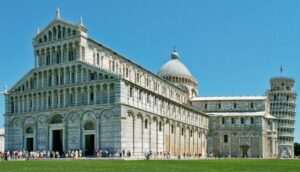
Florence is the art capital of the world. On weekends, we often visit the Uffizi Gallery or the Galileo Museum (a must for engineers!). There is a very active Indian student WhatsApp group where we organize weekend potlucks or cricket matches in local parks. The university also has several engineering clubs and hackathons that are great for making friends. Being in a central location, we also take frequent day trips to Pisa, Siena, or even Bologna. The social life here is a perfect balance of cultural immersion and student fun.
Managing Studies + Social Life + Part-Time Work
Many of us come with scholarships in Italy, but the 20-hour weekly work limit is a great way to earn extra “cushioning” money. However, engineering is a demanding course. Most Indian students find that working more than 10-12 hours a week during the peak semester can be tough. The key is to find part-time roles that are flexible, like tutoring or university student jobs. Balancing a rigorous engineering schedule with work and a social life requires excellent time management, but it’s entirely possible and very rewarding.
FAQs
1. Is the medium of instruction for Engineering at University of Florence in English?
Yes, many Master’s programs and several Bachelor’s modules are offered in English. However, it is highly recommended to learn basic Italian for daily life and social integration.
2. Can Indian students apply for scholarships at UniFI?
Absolutely. Most Indian students apply for the DSU Toscana scholarship, which covers tuition fees and provides a stipend and free/subsidized canteen meals based on family income.
3. What is the accommodation situation for Indian students in Florence?
Students usually live in shared apartments. You can find housing through local platforms or student groups. It’s best to start looking at least 2-3 months before your Italy student visa appointment.
4. Are the Engineering degrees from UniFI recognized in India?
Yes, the University of Florence is a public research university, and its degrees are internationally recognized, including by the AIU in India.
5. How hard are the Oral Exams for Indian students?
They are a challenge at first because we aren’t used to them, but they are very fair. Professors want to see your logic and understanding, not just a memorized answer.
6. Is it easy to find Indian food and groceries in Florence?
Yes, there are several Asian and Indian grocery stores in the city where you can find lentils, spices, and even specific brands of Indian tea and snacks.
7. What are the job prospects after graduating from UniFI?
Excellent. Many students find roles in the EU’s high-tech, automotive, and civil sectors. The university’s job placement office provides great support for internships and career fairs.
Want to Study Engineering at Florence?
The journey from India to the historic streets of Florence is one of the most transformational experiences you can have. If you’re ready to take the next step towards your global engineering career, we are here to help you with everything from university selection to visa processing.