A Day in the Life of an MBBS Student at University of Milan-Bicocca: Real Indian Student Experience
Namaste! If you are an Indian student or a parent researching medical education in Italy, you have likely come across the University of Milan-Bicocca. As someone currently navigating the MBBS student life University of Milan-Bicocca Milan daily routine, I wanted to share a transparent, first-person look at what it is actually like to study here. Unlike the historic, often crowded universities in central Milan, Bicocca offers a modern, innovation-focused campus in the city’s northern district. It has a younger vibe, excellent metro connectivity, and is surrounded by a booming tech startup ecosystem. However, there are unique logistics—like the “Tri-City” structure involving Milan, Monza, and Bergamo—that every Indian applicant needs to understand before booking their Italy student visa.
First Impressions of Milan as an Indian MBBS Student
When I first arrived in Milan for my MBBS in Milan-Bicocca, the first thing that surprised me was how modern the campus felt. Founded in 1998, it lacks the crumbling marble of older Italian schools but makes up for it with cutting-edge laboratories and a very efficient layout. The northern district of Milan is less “touristy” and more “functional,” which is great for focusing on the intense IMAT exam preparation and subsequent medical curriculum.
What truly caught me off guard was the geographical spread. While the university is “Bicocca,” the English-taught School of Medicine and Surgery (SMS) is actually based largely in Bergamo, with science hubs in Monza and Dalmine. You aren’t just living in Milan; you are part of a dynamic, multi-city academic network. The “Tri-City” logistics mean you will spend your first two years traveling between Bergamo and Monza for “wet labs” and practicals.
Pre-Clinical Years (Year 1–3) — A Typical Day
The pre-clinical years are focused on the “Integrated Systems” model. Instead of studying anatomy or physiology in isolation, we study by organ system. For example, during the Locomotor module, we cover the anatomy, physiology, and pathology of bones and muscles simultaneously. This is a radical departure from traditional Indian medical education, but it makes the MBBS in Italy experience much more clinical from day one.
07:00–12:00 Morning Lectures
My day usually starts early. If I’m staying near the main campus, I take the metro to my lecture hall. Classes are small—usually between 15 to 25 people—which allows for a very personal relationship with professors. Lectures typically run from 8:00 AM or 9:00 AM until 1:00 PM. The teaching methodology is heavily based on Problem-Based Learning (PBL), where we work in small groups to solve clinical cases even before we reach the hospital wards.
12:00–14:00 Lunch (Lombardy, Milan-specific lunch culture)
Lunch is a sacred time in Italy. Most Indian students head to the university canteen (Mensa). One of the best perks here is that meals are income-subsidized based on your ISEE. If you have your scholarships in Italy sorted, a full, healthy Italian meal can cost as little as €1.00 to €3.00. While I miss home-cooked dal-chawal, the local pasta and risotto are excellent fuels for a long afternoon of studying.
14:00–17:00 Lab Practicals / Seminars
Afternoons are often spent in the “Wet Labs” in Monza or the Engineering labs in Dalmine. This is where the integration with biomedical engineering happens. We use human biomechanical modeling and motion capture technology to understand the body. This high-tech approach is why Bicocca is considered one of Italy’s most innovative medical programs.
17:00–22:00 Self-Study, Social Time
After classes, I usually head to one of the immaculately kept libraries. The self-directed study culture is strong here; you are expected to be independent. Around 7:30 PM, I’ll meet up with other Indian students. We often cook together to manage the cost of living in Italy, as Milan can be expensive if you eat out daily.
Clinical Years (Year 3–6) — A Typical Day at ASST Monza – Ospedale San Gerardo
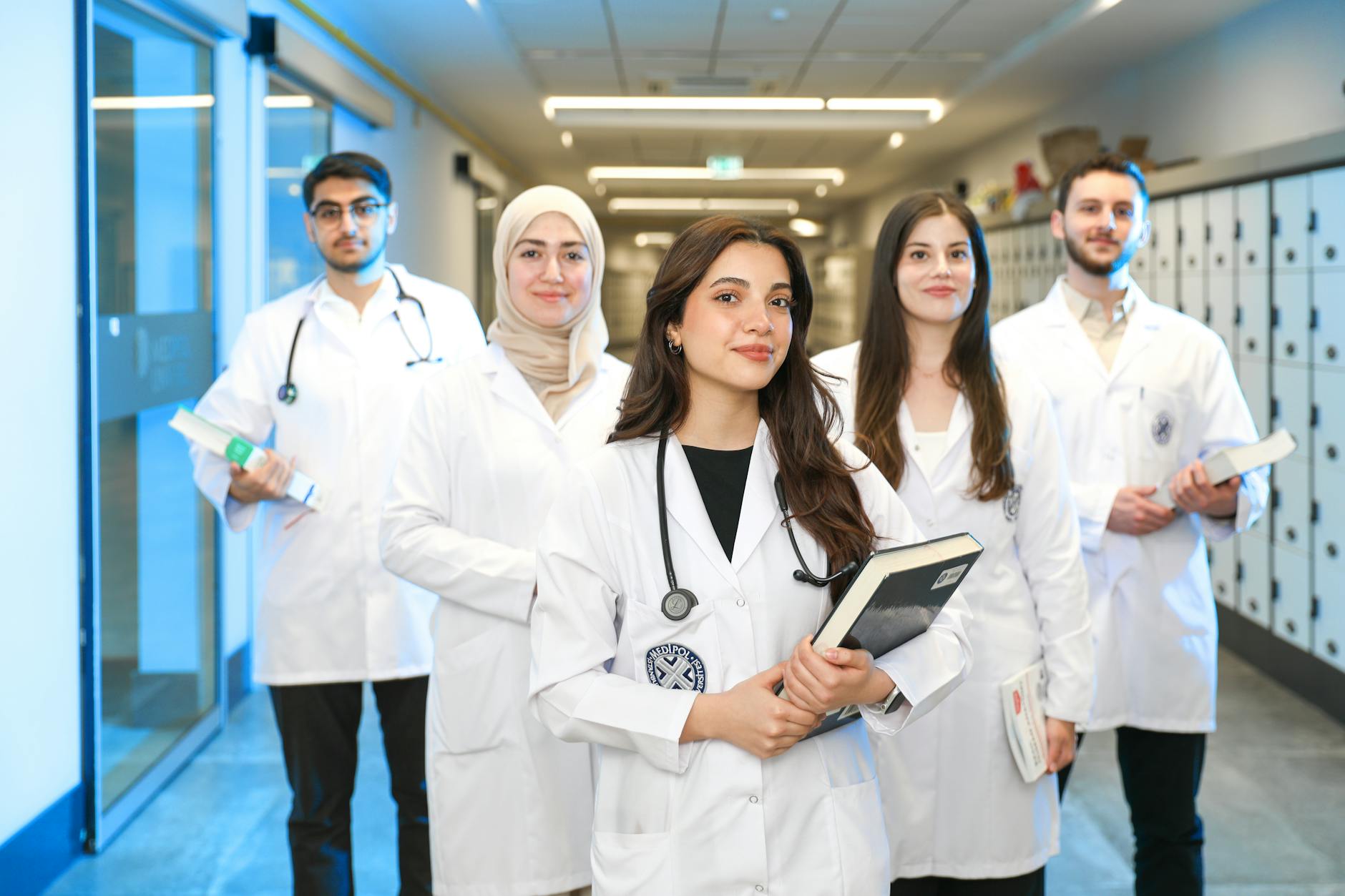
Clinical experience at Bicocca starts surprisingly early—in the 2nd year. By the time you reach the 4th year, you are deeply embedded in the hospital environment, specifically at the ASST Monza – Ospedale San Gerardo or the Papa Giovanni XXIII Hospital in Bergamo.
06:30–08:00 Ward Round Prep
Clinical days start earlier. I need to be at the hospital by 7:30 AM to prep for ward rounds. This involves reviewing patient charts and understanding the overnight developments. As an Indian student, this is where your Italian language skills become vital. While the course is 100% in English, patients speak Italian.
08:00–13:00 Clinical Rotations
We work in small groups (often 1:1 or 1:2 ratio with doctors). We rotate through “Vertical Tracks” that align with our study modules. If we are studying the Cardiovascular system in class, we are on the Cardiology ward in the hospital. We participate in history taking, physical exams, and even diagnostic lab work in Microbiology or Pathology.
13:00–15:00 Departmental Lecture
Lunch is often a quick sandwich at the hospital canteen before a departmental lecture or a case review session. These sessions are highly interactive, focusing on the logical steps required to reach a diagnosis.
15:00–22:00 Case Review, FMGE Prep, Social
For Indian students, the evening often includes a couple of hours dedicated to FMGE or NExT exam preparation. Staying aligned with the Indian curriculum while studying in Europe is a challenge, but the high-quality clinical training at Bicocca provides a very strong foundation.
Weekly Schedules
Pre-Clinical (Year 1-2)
| Day | Morning (09:00-13:00) | Afternoon (14:00-18:00) | Evening (19:00-22:00) |
|---|---|---|---|
| Mon-Wed | Core Lectures (Anatomy/Biochem) | Wet Labs (Monza) | Library / Self-Study |
| Thu-Fri | Integrated Systems Seminars | PBL Group Work | Social / Indian Student Group |
| Sat-Sun | Light Revision | City Exploration / Weekend Trips | Meal Prep for Week |
Clinical (Year 4-6)
| Day | Morning (07:30-13:00) | Afternoon (14:00-17:00) | Evening (18:00-22:00) |
|---|---|---|---|
| Mon-Fri | Hospital Rotations (San Gerardo) | Clinical Lectures / Case Studies | FMGE Prep / Italian Language |
| Saturday | Optional Ward Rounds | Grand Rounds / Research | Rest / Milan Nightlife |
| Sunday | Personal Study | Outdoor Activities (Hiking/Gym) | Reviewing Next Week’s Cases |
Academic Culture at University of Milan-Bicocca
The academic culture here is rigorous but supportive. One unique feature is the “Blocking Subjects” system. For example, you must pass 1st-year Anatomy before you are allowed to take Physiology or Pathology. Exams are a mix of multiple-choice, essays, and the famous Italian oral exams, where you sit face-to-face with a professor to explain complex concepts.
The professors at Bicocca have a reputation for being approachable. There is a strong focus on camaraderie, and the small class sizes mean you aren’t just a number. However, attendance is strictly monitored, and you are expected to put in significant “elbow grease” to keep up with the MBBS in Italy fees and requirements.
Social Life in Milan
Life isn’t just about textbooks. Milan is the second-largest city in Italy and incredibly international. As part of the Indian student community, we celebrate Diwali and Holi, often joining with students from other universities in Italy.
Weekend activities in Milan are endless. We are only 40 minutes from the main Milan fashion district by train, but Bergamo itself offers a more rustic, “authentic” Italian lifestyle. For those who love the outdoors, the mountainous region nearby offers great hiking and mountain biking. Plus, Bergamo’s international airport is a hub for budget airlines—you can find weekend flights to other European cities for as low as €15!
Mental Health & Wellbeing at University of Milan-Bicocca
Medical school is stressful, and Bicocca recognizes this. The university offers counseling services, and the student culture emphasizes teamwork over cutthroat competition. My advice to new students: don’t isolate yourself. Join the ESN (Erasmus Student Network), make friends with local Italians, and ensure you have a life outside of Ospedale San Gerardo.
FAQs
MBBS Student Life at Bicocca: Common Questions
- Is the campus actually in Milan? The main university is in Milan, but the medical program (SMS) is primarily based in Bergamo and Monza. Be prepared for a bit of commuting.
- How expensive is it for Indian students? Tuition is income-based (up to ~€3,500/year). Living expenses in Bergamo are around €700-€900, while Milan is €900-€1,400 per month.
- Do I really need to learn Italian? Yes! While classes are in English, you need Italian to talk to patients during clinical rotations starting in Year 2.
- Can I work part-time? Your student visa allows 20 hours/week, but the medical curriculum is very demanding. Most students focus solely on their studies.
- What is the IMAT cutoff for Bicocca? It is one of the most competitive schools. Recent Non-EU cutoffs have ranged from 42 to over 70 depending on the year’s difficulty.
- Is there Indian food available? Milan has many Indian grocery stores and restaurants, though you will likely do most of your own cooking to save money.
Want This Life in Milan? Apply to Bicocca MBBS
If you’re ready to start your journey toward a world-class medical degree in Italy, don’t navigate the complex admission process alone. From IMAT coaching to visa documentation, we’re here to help you secure your seat at the University of Milan-Bicocca.