A Day in the Life of an Engineering Student at University of Milan: Real Indian Student Experience
When I first landed at Malpensa Airport with three heavy suitcases and a heart full of dreams, I wasn’t just moving to a new city; I was stepping into a legacy of innovation. Navigating engineering student life University of Milan Milan Indian students like myself face is a journey that blends rigorous Italian academic tradition with the high-paced energy of Europe’s fashion and finance capital. Known locally as “La Statale,” the University of Milan (QS #276) offers a unique engineering landscape where theoretical depth meets practical application in a way that truly transforms your perspective as a future innovator.
First Impression — What Indian Engineering Students Say About University of Milan
The first thing that hits you about La Statale is its sheer scale and historical beauty. Unlike the isolated campuses we often see in India, the University of Milan is woven into the very fabric of the city. Walking through the 15th-century “Ca’ Granda” main building feels like walking through history, yet inside the labs, you are working with cutting-edge technology.
Most Indian students are surprised by the autonomy expected here. Back home, we are used to a very structured schedule with constant faculty supervision. In Milan, you are treated as a professional from day one. You are responsible for your own learning path, which is both intimidating and empowering. The international community is massive; you’ll find yourself collaborating with students from Brazil, China, and across the EU, making the university experience truly global.
A Typical Day — Bachelor’s Year 1
The first year of a Bachelor’s in Engineering is all about building a rock-solid foundation. It’s intense, but it prepares you for everything that follows.
Morning — Core Engineering Lectures (Maths, Physics, Computing)
My day usually starts at 7:30 AM. After a quick espresso and a “cornetto” (Italian croissant), I head to the lecture hall. Mornings are dedicated to “Analisi Matematica” or “Fisica.” The professors are world-class researchers who don’t just teach from a textbook; they explain the derivation of every formula. For an Indian student, the level of mathematical rigor can be a shock, but it ensures you understand the “why” behind the “how.”
Afternoon — Lab Sessions & Tutorials
Post-lunch, which I usually have at the university “Mensa” (canteen) for about €4, the focus shifts. We move to the computer labs for “Informatica” or physics labs for experiments. These sessions are where we apply the morning’s theory. We use Python or MATLAB to simulate physical systems. Tutorials are smaller group sessions where “Tutors” (often PhD students) help us solve complex problem sets.
Evening — Group Projects & Self-Study
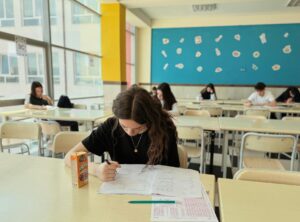
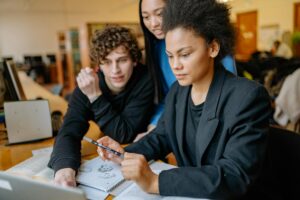
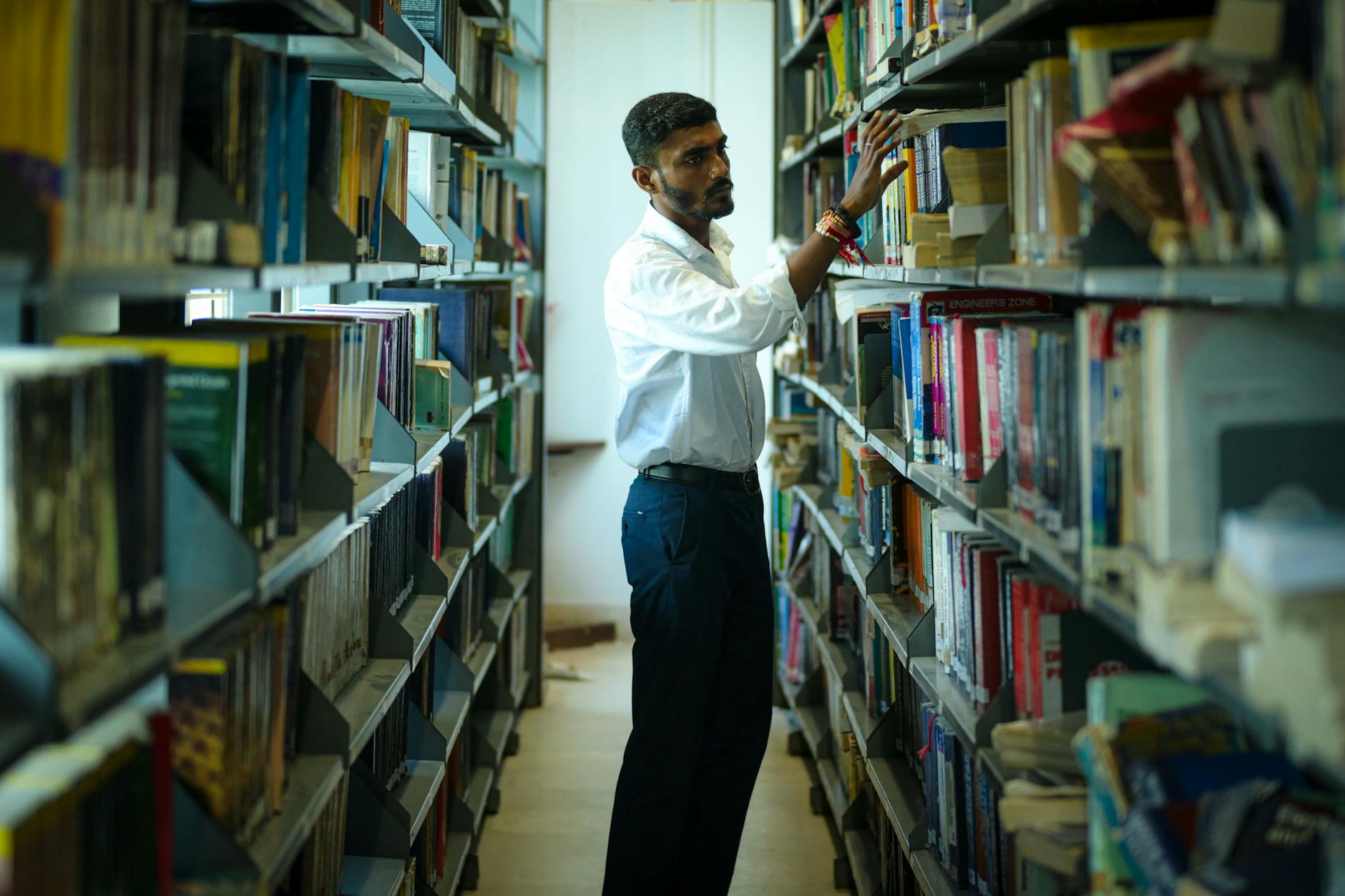
By 6:00 PM, classes end, but the work doesn’t. I usually head to one of the university libraries or a student café. This is the time for group projects. We might be designing a simple bridge structure or debugging a code together. The collaborative culture is strong here; we learn as much from each other as we do from the lectures.
A Typical Day — Master’s Year 1
For those pursuing a Master’s, the routine shifts from broad foundations to deep specialization, often with a heavy focus on industry integration.
Morning — Specialised Lectures (smaller classes, expert professors)
Master’s classes are much smaller, allowing for direct interaction. In programs like “Building Engineering for Sustainability” or “Computer Science and Engineering,” lectures often feel like professional seminars. We discuss the latest trends in AI, Green Energy, or Nanotechnology. The curriculum is highly flexible, allowing you to choose modules that align with your career goals.
Afternoon — Research Lab / Industry Project Work
Afternoons are often spent in specialized research labs. The University of Milan has strong ties with Milan’s industrial sector. You might be working on a project sponsored by a tech giant or a sustainable energy firm. This hands-on experience is vital for your CV and helps you understand the engineering in Italy job market.
Evening — Thesis research, internship applications
The Master’s journey is heavily focused on the final thesis. Evenings are often spent researching papers or applying for internships through the university’s Career Center. Milan is home to thousands of startups and multinational corporations, making it an ideal place to find a placement.
Weekly Schedule
The Italian academic week is structured to provide a balance of intensive study and personal development.
| Day | Morning (9:00 – 13:00) | Afternoon (14:00 – 18:00) | Evening (18:00 onwards) |
|---|---|---|---|
| Monday | Mathematical Analysis II | Computing Lab | Self-Study & Revision |
| Tuesday | Physics: Electromagnetism | Tutorial Sessions | Indian Student Meet-up |
| Wednesday | Chemistry & Materials | Group Project Work | Library Research |
| Thursday | Automation & Control | Elective: Sustainable Energy | Gym / Sports Activity |
| Friday | Technical Drawing / CAD | Seminar / Industry Visit | Aperitivo with Friends |
| Saturday | Weekly Review | Rest / Grocery Shopping | Exploring Milan |
| Sunday | Personal Projects | Day Trip (e.g., Lake Como) | Prep for the Week |
Academic Culture — What Surprises Indian Engineering Students
The transition from the Indian education system to the Italian one involves a significant “culture shock” in terms of how you are assessed and how you learn.
Project-Based Assessment vs Pure Exams
While many Indian exams focus on memorization, Milan focuses on application. Many courses are 50% project-based. You are given a real-world problem and must design a solution using the tools taught in class. This helps in building a portfolio that impresses employers.
Oral Exams (Italian academic tradition)
This is perhaps the biggest surprise. Many engineering exams in Italy have an “Orale” component. After passing a written test, you sit one-on-one with the professor to explain your reasoning. It tests your communication skills and deep understanding of the subject, something highly valued in the European job market.
Collaborative Group Work Culture
Isolation doesn’t work here. The university encourages “Lavoro di Gruppo.” You’ll often be part of a diverse team. Learning to manage different perspectives and working styles is a key part of your growth as an engineer.
Direct Access to Professors
Unlike the rigid hierarchy often found in India, professors at La Statale are quite accessible during their “Ricevimento” (office hours). They encourage questions and are genuinely interested in helping students who show initiative.
Labs, Software & Equipment Indian Students Use
The University of Milan invests heavily in its technical infrastructure. As an engineering student, you will have access to professional-grade tools.
- Software: You will become proficient in MATLAB, ANSYS, CAD/CAM software, and specialized coding environments for AI and Machine Learning.
- Hardware: Access to 3D printing labs, computing clusters for heavy simulations, and electronics labs with high-end oscilloscopes and microcontrollers.
- Specialized Centers: Depending on your major, you might work in the Industrial Chemistry labs, Biomedical Engineering facilities, or Computer Science research hubs.
Social Life as an Engineering Student in Milan
Life in Milan isn’t just about formulas and code; it’s about the “Dolce Vita.”
Milan is Italy’s most international city. There are numerous engineering clubs and hackathons where you can test your skills. The “Indian Students in Milan” group is very active, organizing Diwali celebrations and Holi events that make you feel right at home. Weekends are for exploring the city’s Duomo, visiting the Leonardo da Vinci National Museum of Science and Technology, or taking a quick train ride to Lake Como or the Alps.
Balancing Studies, Social Life & Part-Time Work in Milan
Managing the cost of living in Italy often requires a bit of balancing. On an Italy student visa, you can work up to 20 hours per week. Many Indian students find part-time roles in tutoring, hospitality, or even remote tech internships. The key is time management. Using your “libretto” (student record) to track your exams and planning your study sessions around work hours is essential. Don’t forget to apply for Italy scholarships like the DSU, which can provide free meals and stipends, significantly reducing financial pressure.
FAQs
Is the University of Milan good for engineering?
Yes, it is highly respected globally, particularly for its research in Computer Science, Industrial Chemistry, and Environmental Engineering. Its QS ranking of #276 reflects its academic excellence.
Can I study Engineering in English at Milan?
Absolutely. The University of Milan offers several Bachelor’s and Master’s programs entirely in English to cater to its large international student population.
Is it difficult for Indian students to adapt to the Italian oral exam system?
It takes practice, but most students find it rewarding. It improves your confidence and ability to explain technical concepts clearly, which is a great professional skill.
Are there scholarships available for Indian engineering students?
Yes, Indian students are eligible for both merit-based and need-based (DSU) scholarships, which can cover tuition fees and provide a living allowance.
Do I need to learn Italian to survive in Milan?
While your course is in English and many people in Milan speak English, learning basic Italian will greatly enhance your social life and job prospects.
What is the average cost of a student meal in Milan?
In the university canteen (Mensa), a full meal costs between €3 and €5. Eating out at a casual pizzeria might cost around €12-€15.
Want to Study Engineering at Milan?
Embarking on an engineering degree in Milan is a life-changing decision. At Indian Students Community (ISC), we specialize in helping students like you navigate the entire process, from university selection to visa approval. Don’t let the paperwork stand in the way of your dreams. Contact us today for a free consultation and take the first step toward your global engineering career!