A Day in the Life of an MBBS Student at University of Pisa: Real Indian Student Experience
Choosing to study medicine in Italy is a bold move, but if you have landed a seat at the historic University of Pisa, you are in for a transformative journey. As an Indian student here, the transition from the high-pressure coaching culture of India to the self-directed, research-heavy Italian system is significant. Understanding the MBBS student life University of Pisa Pisa daily routine is essential for any aspirant looking to balance rigorous academics with the Mediterranean lifestyle.
Life in Pisa is centered around the “Polo Fibonacci” and the various medical departments scattered across this ancient city. For us Indians, the day doesn’t just involve textbooks; it involves navigating Italian bureaucracy, learning a new language for hospital rotations, and finding the best spots for a quick espresso between anatomy and physiology lectures. This guide breaks down exactly what you can expect during your six years at one of Italy’s most prestigious institutions.
First Impressions — What Indian Students Really Say About University of Pisa
Most Indian students arrive in Pisa expecting a campus like AIIMS or a private medical college in Karnataka. Instead, you find a “city-campus” where the university is woven into the very fabric of the town. The first thing that strikes you is the age of the institution—founded in 1343—and the weight of tradition. However, once you start your MBBS in Pisa, the reality of “self-study” hits home. Unlike Indian colleges where you are often spoon-fed notes, Pisa expects you to be a researcher from day one.
The Indian community here is growing but tight-knit. We support each other through the “Codice Fiscale” applications and finding the best Indian groceries. Parents are often relieved by the safety of the city and the significantly lower fees in Italy compared to Indian private management seats, making it an aspirational yet practical choice.
Pre-Clinical Years (Year 1–3) — A Typical Day
The first three years are focused on the “hard sciences.” You are building the foundation of your medical knowledge before you are allowed to touch a patient at the Azienda Ospedaliero-Universitaria Pisana.
07:00–12:00 — Morning Lectures (Anatomy, Physiology, Biochemistry)
The day starts early. I usually wake up by 7:00 AM to prepare a quick breakfast—often poha or toast—before catching the bus or walking toward the lecture halls. Lectures typically start at 8:45 AM or 9:00 AM. In the first year, you are immersed in Human Anatomy, Cell Biology, and Medical Physics. The professors are world-class, often leading major research projects. It is vital to stay awake and take active notes; the pace is fast, and the depth of the IMAT exam was just the tip of the iceberg.
12:00–14:00 — Lunch Break (canteen, piazza, or home cooking)
By noon, the “Mensa” (university canteen) is the place to be. For a few Euros, you get a full Italian meal. While pasta is great, many Indian students prefer heading back to their shared flats nearby to cook a quick dal-rice or a vegetable stir-fry. This is also the time when we catch up on news from home or discuss the morning’s lecture with seniors who offer invaluable tips on which textbooks are actually useful for the upcoming oral exams.
14:00–17:00 — Lab Practicals / Seminars
Afternoons are usually reserved for hands-on work. This might involve histology slides, biochemistry experiments, or anatomy dissections. The laboratories at Pisa are well-equipped, emphasizing the “translational research” aspect of the curriculum. These sessions are mandatory and provide a welcome break from the theoretical intensity of the morning lectures.
17:00–22:00 — Self-Study, Library, Social Time
This is where the real work happens. Italian medical education is about 80% self-study. I usually head to the library or a quiet café near the Leaning Tower. Between 5:00 PM and 8:00 PM, I review the day’s content and work on my Anki flashcards. After 8:00 PM, it’s time for dinner and perhaps a walk through the Piazza dei Miracoli to decompress. Staying consistent with daily revision is the only way to survive the “oral exam” culture of Italy.
Clinical Years (Year 3–6) — A Typical Day at Azienda Ospedaliero-Universitaria Pisana
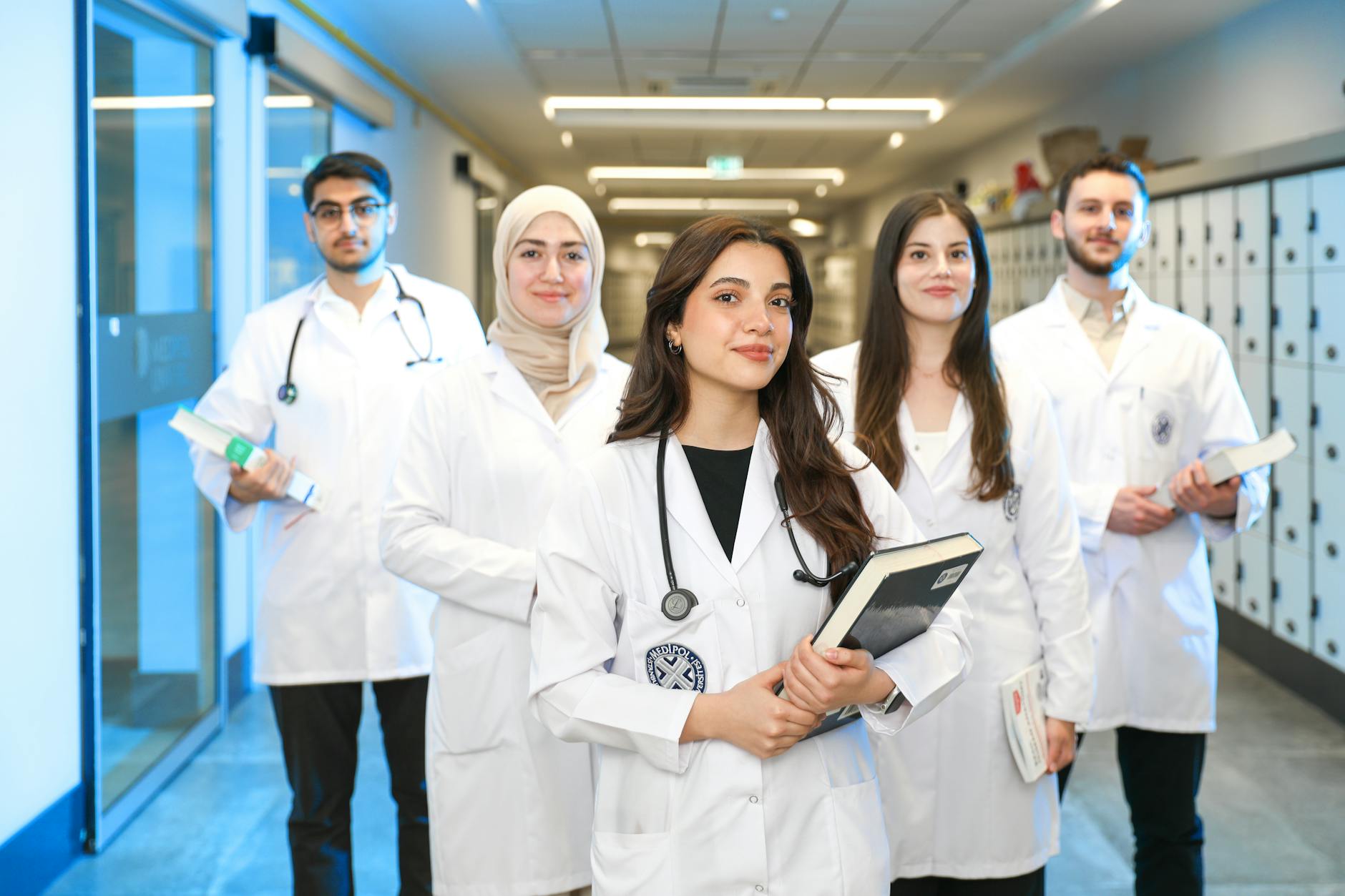
From the second half of the third year, your “campus” shifts to the hospital. This is where you put on your white coat and start learning the art of diagnosis.
06:30–08:00 — Ward Round Preparation
Hospital days start earlier. By 7:30 AM, you should be at the Azienda Ospedaliero-Universitaria Pisana. You’ll need to review patient charts and prepare for the morning rounds. Communication in Italian becomes critical here; while your degree is in English, the patients are Italian, so your B1/B2 language skills are put to the test every single morning.
08:00–13:00 — Clinical Rotations / Bedside Teaching
You rotate through different departments—Internal Medicine, General Surgery, Pediatrics, and more. Bedside teaching is a core part of the medical education in Italy. You observe how senior consultants interact with patients, learn to perform physical examinations, and participate in diagnostic reasoning. It is high-stakes and incredibly rewarding.
13:00–15:00 — Departmental Lecture or Case Discussion
Lunch is often a quick sandwich (panino) at the hospital cafeteria. Afterward, there are often specialized seminars where a specific case from the morning is discussed in detail. These sessions bridge the gap between textbook pathology and real-world clinical presentation.
15:00–22:00 — Case Review, FMGE Prep, Social
Evenings in the clinical years are dual-purpose. Along with university exams, Indian students start their FMGE/NExT preparation. We often form study groups to tackle Indian medical entrance patterns while keeping up with the Italian curriculum. By 9:00 PM, a group of us might meet for a “gelato” or a quick football match to keep our mental health in check.
Weekly Schedule — Pre-Clinical Year
| Day | Morning (09:00–13:00) | Afternoon (14:00–17:00) | Evening (18:00–22:00) |
|---|---|---|---|
| Monday | Anatomy Lecture | Histology Lab | Self-Study / Library |
| Tuesday | Physiology Lecture | Biochemistry Practical | Italian Language Class |
| Wednesday | Cell Biology | Anatomy Dissection | Indian Student Meet-up |
| Thursday | Medical Physics | Study Group (Review) | Gym / Sports |
| Friday | Biochemistry Lecture | Seminar: Ethics in Med | Grocery Shopping / Meal Prep |
| Saturday | Catch-up Reading | Free Time / Exploration | Social Gathering |
| Sunday | Rest / Personal Admin | Weekly Revision | Planning for Week Ahead |
Weekly Schedule — Clinical Year
| Day | Morning (08:00–13:00) | Afternoon (14:00–17:00) | Evening (18:00–22:00) |
|---|---|---|---|
| Monday | Internal Medicine Ward | Cardiology Seminar | NExT / FMGE Prep |
| Tuesday | Surgical Rotation | Case Discussion | Thesis Research |
| Wednesday | Pediatrics Ward | Pharmacology Lecture | Self-Study (Italian Texts) |
| Thursday | OBGYN Rotation | Diagnostic Radiology | Clinical Skills Practice |
| Friday | Emergency Medicine | Public Health Seminar | Weekend Travel Planning |
| Saturday | Hospital Shift (Optional) | Rest / Social | Review Patient Cases |
| Sunday | Rest | Academic Revision | Meal Prep / Relaxation |
Academic Culture at University of Pisa — What Surprises Indian Students
- Oral Exam Tradition: In India, we are used to MCQs and written papers. In Pisa, most major exams are oral. You sit in front of a professor (often with other students watching) and answer questions for 20-30 minutes. It requires deep conceptual clarity and confidence.
- Attendance Expectations: Attendance is strictly monitored for labs and clinical rotations. You cannot simply “proxy” your way through; the university expects 75% to 100% attendance for practical components.
- Self-Directed Learning: There is no “fixed” syllabus with 10 questions that repeat every year. You are expected to read the recommended textbooks (often 1000+ pages) from cover to cover.
Social Life in Pisa as an MBBS Student
Social life is the “secret sauce” that prevents burnout. The Indian student community celebrates Diwali and Holi with great enthusiasm, often inviting our international classmates to join. The Erasmus Student Network (ESN) organizes trips to Florence, Lucca, and the beach at Marina di Pisa, which are just a short train ride away. Since Pisa is a student town, everything is accessible by bicycle, creating a very “college town” vibe that is hard to find in India’s crowded cities.
Mental Health & Wellbeing
Homesickness is real, especially during the first winter or when you miss a festival like Raksha Bandhan. The University of Pisa offers student support services, but the strongest support comes from the Indian community. We have WhatsApp groups for everything—from finding a flat to sharing recipes for the perfect “Ghar jaisa” chicken curry. Managing the cost of living in Italy is also a stressor, but with a bit of planning and a DSU scholarship, most Indian students find their financial footing quickly.
FAQs
1. Do I need to know Italian for the University of Pisa MBBS program?
While the degree is taught in English, you must learn Italian (up to B1/B2 level) by the third year to communicate with patients during clinical rotations in the hospital.
2. Is the MBBS degree from Pisa recognized in India?
Yes, the University of Pisa is recognized by the WHO and the National Medical Commission (NMC). Graduates are eligible to sit for the FMGE/NExT exam to practice in India.
3. How much time should I spend on self-study daily?
Expect to spend at least 3 to 5 hours on self-study every day to keep up with the intense Italian curriculum and the oral exam requirements.
4. Are there Indian food options in Pisa?
There are several Asian/Indian grocery stores where you can find spices, lentils, and basmati rice. There are also a few Indian restaurants in the city center.
5. Can I work part-time as a medical student in Pisa?
While legally allowed to work 20 hours a week on a student visa, the medical curriculum is extremely demanding. Most students find it difficult to balance a job with MBBS studies.
6. What is the Azienda Ospedaliero-Universitaria Pisana?
It is the primary teaching hospital affiliated with the University of Pisa, where you will spend your final three years doing clinical rotations and internships.
Want This Life? Apply to Pisa MBBS
If you are ready to trade the coaching centers for the historic corridors of Pisa and embark on a global medical career, we can help you with the application, IMAT coaching, and visa process. Contact us today for a free counseling session!