A Day in the Life of an Engineering Student at University of Pisa: Real Indian Student Experience
Deciding to move from India to Italy for my degree was a massive step, but exploring the engineering student life University of Pisa Pisa Indian students lead has been an eye-opening journey. As an Indian student here, your day is a mix of rigorous academics, intense lab sessions, and the unique lifestyle that only a historic Tuscan city can offer. Whether you are coming for a Bachelor’s in Aerospace or a Master’s in Computer Engineering, the rhythm of life at Unipi is distinct, demanding, and ultimately very rewarding.
For parents back home, it is important to know that the University of Pisa, ranked #328 in the QS World University Rankings, offers a world-class engineering education. While the curriculum is tough, the support system within the Indian community and the accessibility of professors make it a manageable and aspirational destination for any young engineer.
First Impressions — What Indian Engineering Students Say About University of Pisa
The first thing that hits most Indian students is how integrated the university is with the city. There is no single gated campus; instead, the departments are housed in historic buildings and modern hubs scattered across Pisa. Walking to your “Mathematics for Engineering” lecture means passing the Leaning Tower or crossing the Arno River.
Many students find the initial transition to be a “culture shock” in terms of teaching style. Unlike many Indian colleges where rote learning might sometimes sneak in, Pisa demands a deep conceptual understanding from day one. You aren’t just learning formulas; you are learning the “why” behind them. However, the warmth of the local student community and the growing number of Indians on campus quickly make the city feel like a second home.
A Typical Bachelor’s Year 1 Day
Morning — Core Engineering Lectures (Mathematics, Physics, Computer Science)
My day usually starts around 7:30 AM in a shared student apartment. After a quick breakfast, I head to the Engineering Pole (Polo Fibonacci or Polo A). Morning lectures are typically dedicated to the “hard” sciences that form the foundation of any Italian engineering degree. Lectures are long, usually two hours each, and delivered with a focus on theoretical proofs and derivations. Professors use blackboards or digital slides, and taking meticulous notes is essential for surviving the upcoming exam session.
Afternoon — Lab Sessions & Tutorials
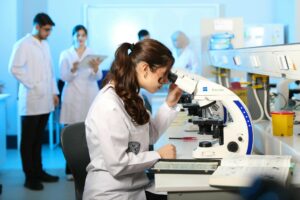
After a lunch break at one of the university canteens (Mensa)—where you can get a full meal for a subsidized price—the afternoon is usually more practical. For a first-year student, this means physics or chemistry labs where you work in small groups to conduct experiments. These sessions are crucial for building the hands-on skills required in engineering in Italy. If there are no labs, I usually attend tutorials (esercitazioni) where TAs help us solve complex problems from the morning’s lectures.
Evening — Group Project Work & Self-Study
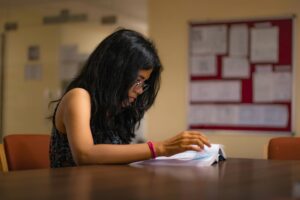
By 5:30 PM, the formal classes end, but the work doesn’t. Many Bachelor’s courses now include group components. We often meet at a library or a café near Piazza dei Cavalieri to work on problem sets. Self-study is non-negotiable; for every hour of lecture, you typically need two hours of independent review to keep up with the pace.
A Typical Master’s Year 1 Day
Morning — Advanced Specialised Lectures (smaller groups, greater depth)
For Master’s students, the morning starts a bit later but is more intense. Since Master’s programs (Laurea Magistrale) are more specialized—like Aerospace, Biomedical, or Cybersecurity—the classes are smaller. This allows for a much more conversational style of teaching. We dive deep into topics like Advanced Software Engineering or Space Flight Mechanics. The focus here is on current research and industry-standard methodologies.
Afternoon — Research Lab Session or Industry Project
Afternoons for Master’s students are often spent in high-tech research centers like the “E. Piaggio” Research Center. This is where you might work on 3D neuron segmentation software, robotics, or embedded systems. Many Master’s students are also involved in industry-linked projects, working on real-world problems for European tech firms. This practical exposure is a highlight of the international university experience in Pisa.
Evening — Thesis literature review, internship applications
Evening time for a Master’s student is often spent in the library, not just studying for exams but preparing for the future. This involves reading research papers for a potential thesis topic or browsing LinkedIn and the university’s career portal for internships. Navigating the Italy student visa regulations for post-study work is also a common topic of discussion during these late-hour study sessions.
Weekly Schedule — Bachelor’s Year
| Day | Morning | Afternoon | Evening |
|---|---|---|---|
| Monday | Mathematical Analysis I | Physics I Lab | Self-Study (Calc) |
| Tuesday | Physics I Lecture | Computer Science Basics | Group Problem Set |
| Wednesday | Chemistry for Engineers | Mathematical Analysis Tutorial | Review Notes |
| Thursday | Mathematical Analysis I | Physics I Lecture | Library Session |
| Friday | Computer Science Lab | Free / Elective Course | Grocery Shopping |
| Saturday | Self-Study / Revision | Free Time / Social | Indian Cooking with Friends |
| Sunday | Relax / Call Home | Weekly Planning | Rest |
Weekly Schedule — Master’s Year
| Day | Morning | Afternoon | Evening |
|---|---|---|---|
| Monday | Advanced Software Engineering | Research Lab Training | Thesis Research |
| Tuesday | Cyber-Physical Systems | Software Verification Lab | Internship Search |
| Wednesday | Distributed Systems | Project Group Meeting | Self-Study |
| Thursday | Advanced Networking | Industry Partner Seminar | Literature Review |
| Friday | Specialized Elective | Data Science Lab | Networking / Clubs |
| Saturday | Deep Work (Thesis) | Day Trip to Lucca/Florence | Relax |
| Sunday | Rest | Meal Prep | Exam Prep |
Academic Culture — What Surprises Indian Engineering Students
Project-Based Assessment (design projects, group builds)
Unlike the traditional examination-heavy systems in many Indian universities, Pisa places a heavy emphasis on projects. Whether it’s designing a VTOL configuration for a drone or building a secure database system, these projects often account for a significant portion of your final grade. You are expected to document your process, justify your design choices, and often present your results to the class.
Italian-Style Oral Exams (even for engineering subjects)
This is the biggest hurdle for most Indian students. In Italy, most exams have a mandatory oral component (colloquio). After passing a written test, you sit face-to-face with the professor. They might ask you to derive a formula on the spot or explain the logic behind your project. It tests not just what you know, but how well you can communicate complex technical ideas. It is stressful initially, but it builds incredible confidence.
Collaborative, Problem-Solving Culture
There is a strong “study group” culture here. Because the exams are so difficult, students rarely study in isolation. You will often find groups of students occupying university halls late into the evening, debating thermodynamics or coding logic on shared screens. This collaborative environment is where some of the best learning happens.
Direct Access to Professors and PhD Researchers
Professors at Unipi are generally very approachable during their “ricevimento” (office hours). Unlike the more formal hierarchies sometimes found in India, you are encouraged to ask questions and challenge ideas. PhD researchers and lab assistants are also readily available to help with technical glitches in your research or lab work.
Labs, Software & Equipment at University of Pisa Engineering
The University of Pisa provides access to high-end infrastructure that is essential for a modern engineering degree. Students get hands-on experience with:
- Design & Simulation: Extensive use of CAD/CAM software, MATLAB, ANSYS, and CATIA for mechanical and aerospace design.
- Computing: Access to high-performance computing clusters and dedicated labs for Cybersecurity and Data Science.
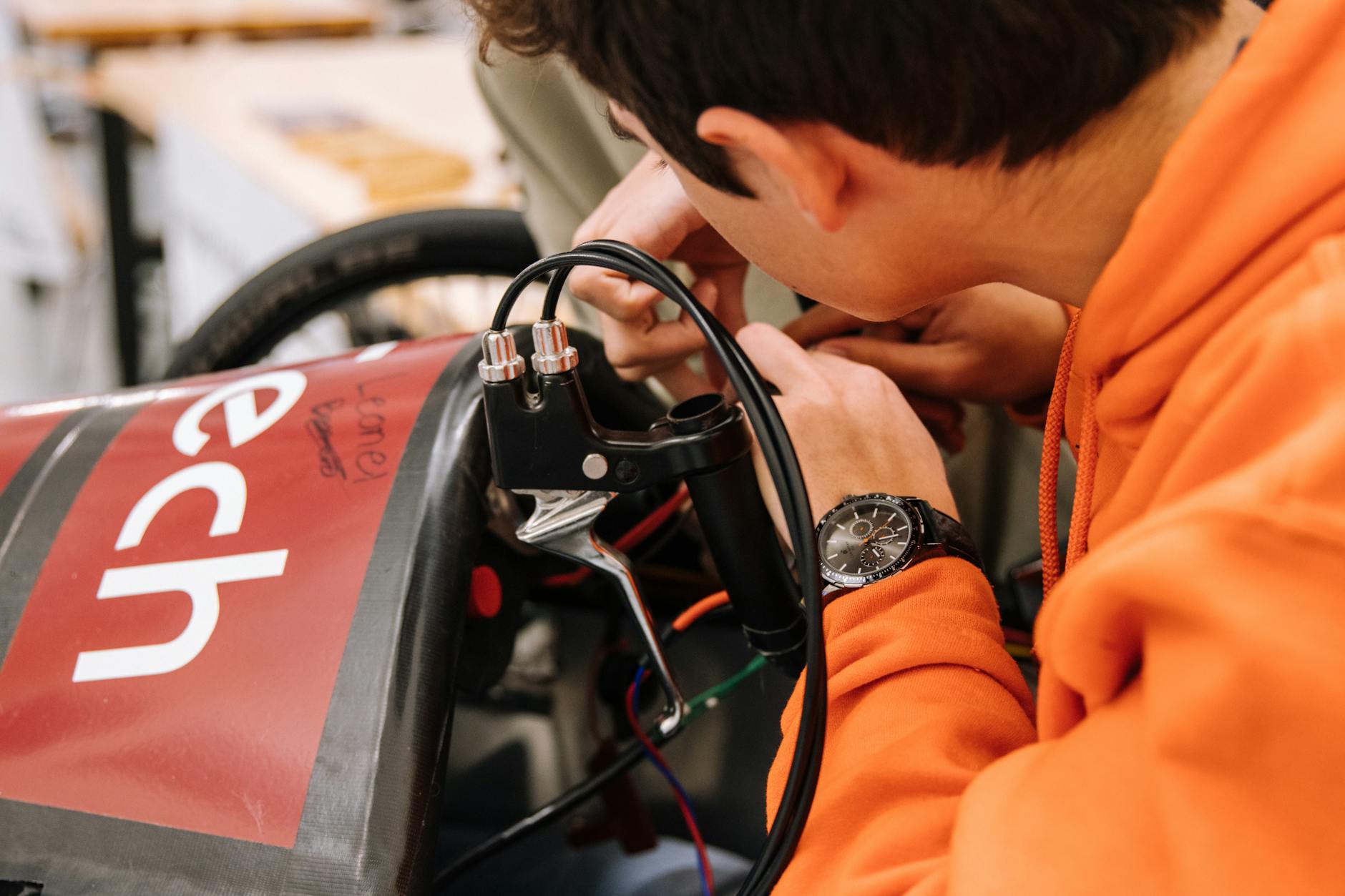
- Manufacturing: 3D printing labs and CNC machinery for prototyping in mechanical and industrial engineering.
- Specialized Equipment: Wind tunnels for Aerospace, electronics labs for circuit design, and cleanrooms for biomedical research.
The university also makes sure students are proficient in industry-standard software, ensuring you are ready for the European job market upon graduation.
Social Life as an Engineering Student in Pisa
Life isn’t just about the library. As the home of Galileo Galilei, Pisa is a city that celebrates intellect and history. Engineering students often join specialized clubs like the robotics team or coding hackathons. These are great ways to meet local students and build a professional network.
For Indian students, the “Indian Student WhatsApp Group” is a lifeline. It’s where we organize Diwali celebrations, share tips on where to find the best spices, and plan weekend trips. Pisa’s location is perfect; you are just 20 minutes from the coast at Marina di Pisa and a short train ride away from the cultural hubs of Florence and Lucca. Balancing the cost of living in Italy with these social outings is a key part of the student experience.
Managing Studies + Social Life + Part-Time Work
Many Indian students look for part-time work to help cover their expenses. Italian law allows students to work up to 20 hours per week. While this is a great way to earn extra money, engineering is a demanding field. Most students find that they can only manage a few hours of work during the week, perhaps more during the holidays. Balancing the 20-hour limit with labs, lectures, and self-study requires excellent time management. Many students also apply for scholarships in Italy to ease the financial pressure, allowing them to focus more on their core academic goals.
FAQs
Is the medium of instruction entirely in English for Engineering?
Most Master’s programs in Engineering at the University of Pisa are taught entirely in English. However, for Bachelor’s programs, while many resources are available in English, several core lectures might be in Italian. It is important to check the specific course “didattica” on the Unipi website before applying.
How difficult are the oral exams for Indian students?
They are challenging because they require a different type of preparation than written exams. You must be able to explain your logic verbally. Most Indian students find them intimidating at first, but after the first semester, they appreciate how these exams improve their technical communication skills.
Can I find Indian food and groceries in Pisa?
Yes, there are several international grocery stores in Pisa that stock Indian spices, lentils, and basmati rice. There are also a few Indian restaurants in the city for when you are missing home-cooked food. Most students prefer cooking at home in shared kitchens to save money.
Is Pisa a safe city for international students?
Pisa is generally considered a very safe, student-dominated city. Because the university is so central to the city’s life, the streets are always full of young people. Like any city, you should take standard precautions, but it is a very welcoming environment for Indian students.
What is the average cost of living for a student in Pisa?
Excluding tuition, a student can live comfortably on €700 to €900 per month, covering rent, food, transport, and basic leisure. This can vary based on whether you live in a shared room or a private studio and how much you travel on weekends.
How do I apply for the DSU scholarship at Pisa?
The DSU (Diritto allo Studio Universitario) scholarship is based on family income (ISEE-U parificato). You need to submit specific documents from India, including income certificates and property details, which must be translated and legalized. The application window usually opens in July.
Are there opportunities for internships during the degree?
Yes, the University of Pisa has a dedicated Career Service that helps students find internships (tirocini). Master’s students, in particular, often complete their thesis in collaboration with a company, which counts as an internship and provides vital industry exposure.
Want to Study Engineering at Pisa?
Starting your engineering journey in Italy is a bold move that can set you apart in the global job market. If you need help with university selection, the visa process, or scholarship applications, we are here to guide you through every step. Contact us today to start your Italian adventure.