A Day in the Life of an Engineering Student at University of Milan-Bicocca: Real Indian Student Experience
When I first landed in Lombardy, I wasn’t just looking for a degree; I was looking for a future. Navigating the engineering student life University of Milan-Bicocca Milan Indian students experience is a journey through one of Europe’s most modern and innovation-focused campuses. Situated in Milan’s northern district, the university offers a much younger, more dynamic vibe compared to the historic, crowded centers of older Milanese institutions. Whether you are aiming for engineering at Milan-Bicocca or exploring broader engineering in Italy options, life here is defined by cutting-edge technology and a booming startup ecosystem.
First Impressions of Milan as an Indian Engineering Student
The first thing that surprised me about the University of Milan-Bicocca was the campus layout. Unlike the scattered buildings of many European universities, Bicocca is a concentrated district designed specifically for education and research. Coming from India, the first shock was the “young” feel of the place—it was only founded in 1998, so everything from the lecture halls to the libraries feels state-of-the-art. The excellent metro connectivity (the Purple Line M5) makes commuting from shared apartments quite easy, which is a relief when you are balancing a tight budget.
I expected Milan to be all about old cathedrals and high fashion, but the northern district where Bicocca sits is the city’s tech heart. You are surrounded by fintech firms, software houses, and research centers. For an Indian student, this means the distance between your classroom and a potential internship at a global firm is physically and metaphorically very short. The transition is manageable, provided you have your Italy student visa and cost of living in Italy estimates in order before you arrive.
A Typical Bachelor’s Year 1 Day
Morning — Core Lectures (Maths, Physics, Computing)
My day usually starts at 8:30 AM. In the first year of a Bachelor’s, the focus is heavily on the “hard sciences.” Most lectures are held in large, modern halls equipped with digital displays. It is intense—you will be sitting through advanced calculus or thermodynamics for three hours. The professors are highly accessible, often staying back to answer questions, which was a pleasant surprise compared to the more rigid hierarchies I was used to.
Afternoon — Lab Sessions & Tutorials
After a quick lunch at one of the campus canteens (which are quite affordable if you use your student card), afternoons are for “Exercise Sessions” or tutorials. This is where we break into smaller groups to solve engineering problems. In programs like Informatics or Data Science, this is when we get hands-on with coding. It is collaborative, and you will often find yourself working with Italian and other international students, which helps in picking up the local language and culture.
Evening — Group Projects & Self-Study
By 5:00 PM, the formal classes usually wrap up, but the work doesn’t end. Most Indian students head to the central library or the dedicated study rooms in Building U6. Engineering at Bicocca is very project-heavy. We spend our evenings working on MATLAB simulations or group coding assignments. This is also the time when I usually check my budget or look for scholarships in Italy to manage my expenses for the next semester.
A Typical Master’s Year 1 Day
Morning — Advanced Specialised Lectures
For Master’s students, the mornings are more specialized. If you are in Artificial Intelligence for Science and Technology or Materials Science, your lectures will often involve discussing the latest research papers. The class size is smaller, and the interaction is much more peer-to-peer. You aren’t just learning from a textbook; you are learning how to contribute to the field.
Afternoon — Research Lab / Industry Project
Afternoons for Master’s students are often spent in one of the many research labs. Bicocca has incredible facilities for nanotechnology and data science. Many of my friends work on projects that are directly funded by Lombardy’s industry partners. It is high-pressure but incredibly rewarding, as you are using the same equipment you would find in a professional R&D department.
Evening — Thesis research, internship applications
Master’s students are always thinking about the “after.” Evenings are usually dedicated to thesis research or scouring LinkedIn for internships in Milan’s tech startup scene. The university’s career service is very active, often hosting webinars or workshops for international students to help us tailor our CVs for the Italian market.
Weekly Schedules
Bachelor’s Schedule
| Day | Morning (9 AM – 1 PM) | Afternoon (2 PM – 5 PM) | Evening (5 PM onwards) |
|---|---|---|---|
| Monday | Mathematical Analysis I | Physics Lab | Self-study / Library |
| Tuesday | General Chemistry | Computer Science Tutorial | Indian Student Meetup |
| Wednesday | Geometry & Linear Algebra | Language Course (Italian) | Group Project Work |
| Thursday | Physics I | Problem Solving Session | Part-time work / Gym |
| Friday | Informatics Fundamentals | Lab Report Writing | Weekend Planning |
| Saturday | Revision | Grocery Shopping (Asian Stores) | Socializing in Milan |
| Sunday | Relaxation | Meal Prep for week | Thesis/Project Review |
Master’s Schedule
| Day | Morning (9 AM – 1 PM) | Afternoon (2 PM – 6 PM) | Evening (6 PM onwards) |
|---|---|---|---|
| Monday | Advanced AI Algorithms | Research Lab Activity | Thesis Preparation |
| Tuesday | Big Data Analytics | Industry Partner Seminar | Networking / LinkedIn |
| Wednesday | Cybersecurity Management | Project Prototyping | Shared Cooking (Desi Food) |
| Thursday | IoT Architectures | Research Assistantship | Italian Culture Club |
| Friday | Robotics & Automation | Career Service Workshop | Milan Nightlife / Relax |
| Saturday | Deep Work / Research | Personal Projects | Exploring Lombardy |
| Sunday | Rest | Admin / Visa paperwork | Weekly Planning |
Academic Culture at University of Milan-Bicocca
Project-Based Assessment
Unlike the exam-only culture in many Indian colleges, Bicocca emphasizes continuous assessment through projects. This is especially true for Computer Science and Data Science. You will be expected to build software, analyze real-world datasets, and present your findings. This prepares you far better for the workforce than just memorizing theory.
Italian Oral Exam Tradition
One thing that catches Indian students off guard is the “Oral Exam.” Even in engineering, you might have to sit in front of a professor and explain your project or answer theoretical questions verbally. It requires a deep understanding of the subject and good communication skills, which are vital for your future career in Europe.
Collaborative Culture
Bicocca is not a “cut-throat” environment. There is a strong culture of sharing notes and working together in study groups. International associations like ESN (Erasmus Student Network) are very active here, helping you connect with peers across different departments.
Direct Professor Access
Professors at Bicocca are generally very approachable. Most have “ricevimento” (office hours) where you can walk in and discuss your doubts. This level of support is crucial when you are tackling difficult engineering concepts in a foreign environment.
Labs & Equipment at University of Milan-Bicocca
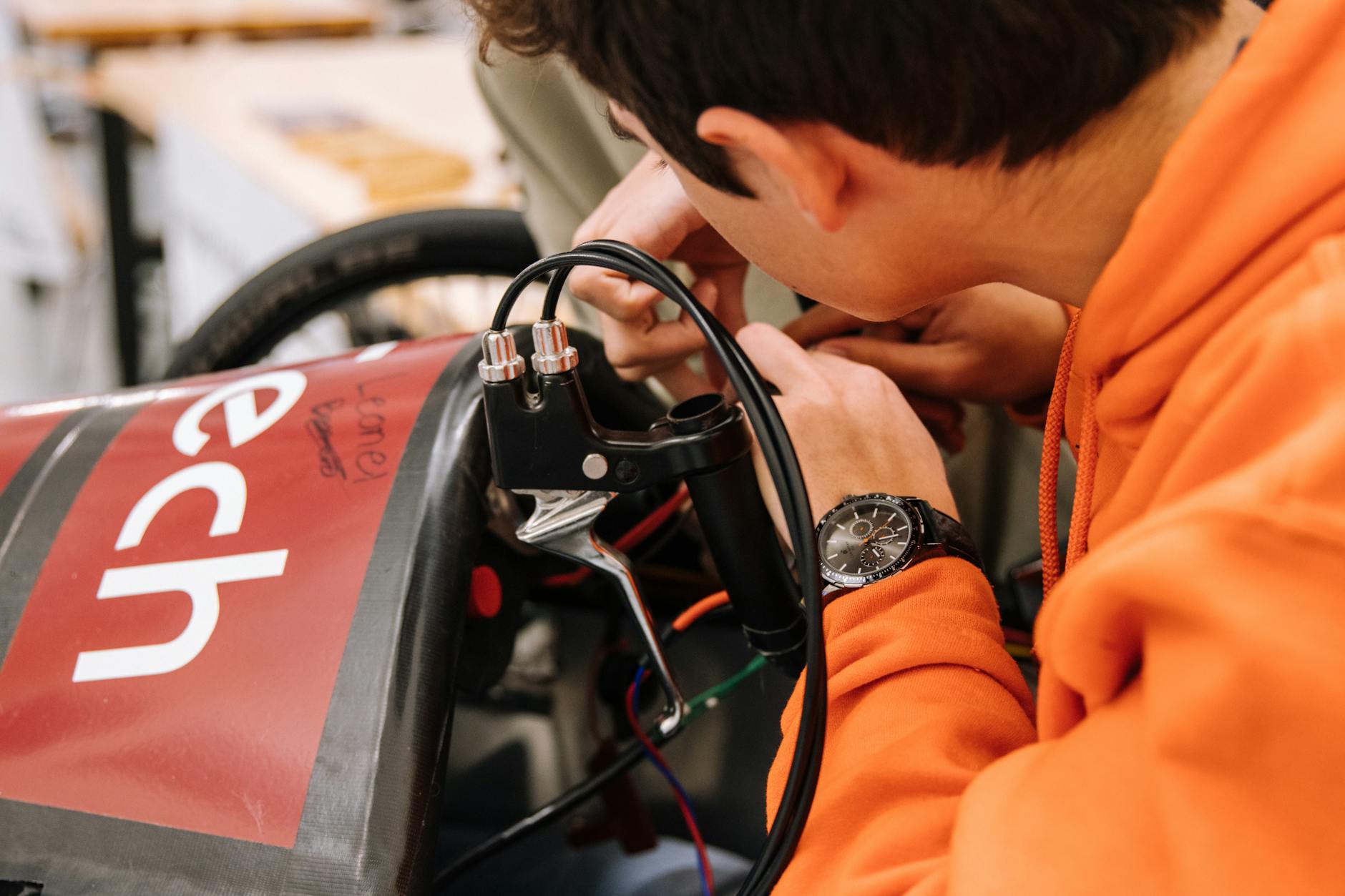
The labs here are a major draw. For students focusing on Computer Science, Statistics, or Data Science, the computing power available is top-tier. We use tools like MATLAB, ANSYS, and various CAD/CAM software on high-end workstations. For those in specialized tracks, there are 3D printing labs and advanced electronics workshops. Being in Milan, the university often gets the latest equipment through tie-ups with Lombardy-based tech firms, ensuring that what you learn is industrially relevant.
Social Life in Milan
Life isn’t just about the labs. There are numerous engineering clubs, hackathons, and innovation challenges that happen throughout the semester. The Indian student group at Bicocca is growing, and we often celebrate festivals like Diwali or Holi on campus or in nearby parks. On weekends, we make the most of Milan—from exploring the Duomo to catching a train to Lake Como. Since the university was founded in 1998, it has a very youthful spirit, and the surrounding Bicocca Village offers cinemas, shopping, and plenty of places to hang out with friends.
Balancing Studies + Social Life + Part-Time Work
Managing your time is the hardest part. Between 20-25 hours of lectures and another 20 hours of self-study, the schedule is tight. Many Indian students take up part-time jobs (allowed up to 20 hours a week on a student visa) in cafes or as research assistants. The key is to use the university’s apps to stay organized. Bicocca has a dedicated app for managing your class schedule, room bookings, and exam registrations, which is a lifesaver for busy engineering students.
FAQs
Frequently Asked Questions
- Is the medium of instruction entirely in English for Engineering? Yes, many Master’s programs like Computer Science and Data Science are taught fully in English, though Bachelor’s programs may have more Italian components.
- Can I work part-time while studying engineering? Yes, your student visa allows you to work up to 20 hours per week, which many students use to cover their living costs.
- What is the cost of living for a student in the Bicocca district? On average, expect to spend €800–€1,200 per month, depending on whether you get university housing or a private shared flat.
- Are there specific scholarships for Indian students? Yes, you can apply for DSU regional scholarships based on family income, which can cover tuition and provide a stipend.
- Do I need to learn Italian to survive in Milan? While classes are in English, learning basic Italian is highly recommended for social life and for landing part-time jobs.
- How is the metro connectivity to the campus? Excellent. The M5 (Purple Line) has a dedicated “Bicocca” station right at the heart of the campus.
- Is it easy to find Indian food in Milan? Yes, Milan has several Indian grocery stores and restaurants, especially around the central areas, easily accessible via metro.
- What are the career prospects after graduating from Bicocca? Very strong. Milan is Italy’s tech and finance hub, and Bicocca’s reputation for innovation helps graduates secure roles in top firms.
Want to Study Engineering at Bicocca in Milan?
Ready to start your journey at one of Italy’s most innovative universities? Get expert guidance on applications, scholarships, and visas today. Contact us for a personalized consultation.
For more information, explore our guides on Italian universities, Engineering at Bicocca, and the general process of studying engineering in Italy.