Clinical Training at University of Milan: Teaching Hospital, Rotations & Patient Exposure
For Indian students aspiring to become world-class doctors, the University of Milan clinical training MBBS teaching hospital experience offers a transformative journey into modern medicine. As one of Italy’s most prestigious medical faculties, the University of Milan (UniMi) combines rigorous academic standards with hands-on exposure at some of Europe’s leading healthcare institutions. Understanding how clinical rotations function is essential for parents and students planning their medical education in Italy.
The International Medical School (IMS) at UniMi is specifically designed for a global cohort, delivering the entire curriculum in English while ensuring students are fully integrated into the Italian healthcare system. With a focus on translational medicine—moving discoveries from “bench to bedside”—students at Milan are trained not just to treat symptoms, but to understand the scientific foundation of every diagnosis.
Pre-Clinical vs Clinical Years at University of Milan
The MBBS in Milan program follows a traditional European six-year structure, divided into two distinct phases. This ensures that students have a rock-solid scientific foundation before they ever interact with a patient in a professional capacity.
- Year 1–3 (Pre-clinical): The first two and a half years are primarily based at the LITA Segrate Campus. Students focus on the “Foundations of Medicine,” covering subjects like Molecular Biology, Anatomy, Physiology, and Biochemistry. While the focus is theoretical, UniMi introduces early patient contact and clinical skills labs to prepare students for the transition.
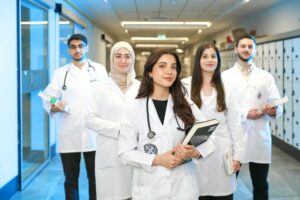
- Year 3–6 (Clinical Transition): Starting in the second semester of the third year, the focus shifts entirely to the clinical world. This is where the University of Milan clinical training MBBS teaching hospital immersion begins. Students move from the classroom to the hospital wards, rotating through various specialties and participating in real-world patient care under expert supervision.
Teaching Hospital — IRCCS Ca’ Granda – Ospedale Maggiore Policlinico
The primary teaching hospital for the University of Milan is the IRCCS Ca’ Granda – Ospedale Maggiore Policlinico, often referred to simply as “Il Policlinico.” Founded in 1456, it is one of the oldest and most respected hospitals in Italy, serving as a hub for both high-level care and cutting-edge research.
Hospital Profile:
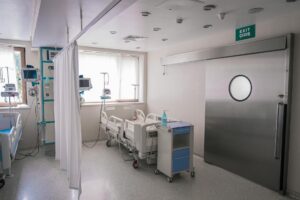
Il Policlinico is a massive multi-specialty facility located in the heart of Milan. It houses approximately 900 beds and is a national leader in areas such as emergency medicine, organ transplants, rare diseases, and maternity care (the Mangiagalli Clinic). As an IRCCS (Istituto di Ricovero e Cura a Carattere Scientifico), it is officially recognized by the Italian Ministry of Health for its excellence in clinical research.
Significance for Training:
For an Indian student, training at Il Policlinico means exposure to a vast and diverse patient pool. The hospital’s strong interdisciplinarity allows students to see how complex cases are managed across different departments. Being situated near the main university campus, it provides a seamless link between lectures and practical application.
Year-by-Year Clinical Rotation Schedule
The clinical curriculum is meticulously structured to build competency over time. Students must complete a total of 60 ECTS (European Credit Transfer and Accumulation System) dedicated solely to professional training and clinical clerkships.
| Year | Phase | Rotation/Subject | Duration | Key Skills |
|---|---|---|---|---|
| Year 3 | Introduction | Semeiotics & Basic Clinical Skills | 1 Month | History taking, physical examination, and doctor-patient communication. |
| Year 4 | Core Specialties | Internal Medicine, General Surgery, Cardiology | 3-4 Months | Diagnostic reasoning, interpreting lab results, and ward management. |
| Year 5 | Advanced | Paediatrics, Ob-Gyn, Oncology, Neurology | 4-5 Months | Specialized diagnostic tools, surgical assistance, and chronic care. |
| Year 6 | Thesis + Finals | Evaluation Internship (General Medicine, Surgery, ER) | 300 Hours | Clinical autonomy, emergency response, and final thesis defense. |
Specialties Covered During Clinical Training
The University of Milan ensures that every graduate is a well-rounded general physician capable of handling any medical challenge. During the clinical years, students rotate through a comprehensive list of specialties, including:
- Internal Medicine & Surgery: The backbone of the clinical years, emphasizing the management of systemic diseases and perioperative care.
- Paediatrics & Ob-Gyn: Focused on maternal-fetal medicine and child health at the renowned Mangiagalli Clinic.
- Cardiology & Neurology: Leveraging Milan’s advanced imaging and diagnostic facilities for heart and brain health.
- Psychiatry & Emergency Medicine: Training students to handle mental health crises and acute trauma cases in a high-pressure ER environment.
Language in Clinical Settings
While the IMAT exam and subsequent lectures are in English, the hospital wards are inherently Italian-speaking environments. For Indian students, this is both a challenge and a significant professional advantage.
To ensure students can effectively communicate with patients, the University of Milan provides mandatory, free Italian language courses during the first two years. Students are expected to reach a B2 level of proficiency before starting their full rotations at the end of the third year. In practice, most Indian students find that basic conversational Italian is sufficient to start, and their fluency grows rapidly through daily interaction with patients and Italian peers.
Research Opportunities for MBBS Students
Research is at the heart of the University of Milan’s identity. Students are encouraged to join research labs and contribute to ongoing clinical trials early in their education. A unique requirement of the Italian medical degree is the mandatory Year 6 Thesis. This is not just a paper but an original research project or an extensive clinical review supervised by a faculty professor.
The University offers international collaborations, allowing students to spend time at partner institutions in the US or Europe via the Erasmus+ program. For students aiming for the USMLE pathway or a career in academic medicine, the publication opportunities at Milan are world-class.
University of Milan Clinical Training vs Indian Medical Colleges
For parents comparing an MBBS in Italy with options in India, the following comparison highlights the differences in training philosophy.
| Factor | University of Milan | Top Govt College India | Average Private India |
|---|---|---|---|
| Patient Exposure | High (Advanced Pathology) | Very High (Volume-based) | Moderate to Low |
| Infrastructure | World-class / Digitalized | Varies / Often Overburdened | Good but variable |
| Clinical Autonomy | Guided / Supervision-heavy | High (Internship level) | Moderate |
| Research Access | Integrated / High Funding | Limited to specific units | Often Minimal |
| Global Recognition | High (EU/US/WHO) | High (WHO/NMC) | Varies by College |
Career Impact of University of Milan’s Clinical Training
Graduating from UniMi opens doors across the globe. The clinical training is designed to meet EU standards (Directive 75/363/EEC), meaning the degree is automatically recognized in all 27 EU countries.
- FMGE/NExT Readiness: The heavy emphasis on clinical reasoning and pathology aligns well with the requirements of the Indian medical licensing exams.
- USMLE Pathway: Many UniMi graduates successfully match into US residencies because of the university’s strong research reputation and standardized clinical training.
- EU Practice Rights: Upon graduation and passing the “abilitazione” (integrated into the final year), students can register directly with the Italian medical council and practice across Europe.
A Day in Clinical Year at Milan
What does life actually look like for a 4th or 5th-year student? A typical day starts early:
- 08:30 – 12:30: Ward Rounds. Students join the “equipe” (medical team) at Il Policlinico. You might spend the morning assisting in the outpatient clinic or following a senior consultant during bedside rounds.
- 13:00 – 14:00: Lunch. Often spent at the “Mensa” (university canteen) discussing cases with peers.
- 14:00 – 16:30: Lectures or Seminars. Theoretical sessions held at the hospital teaching wings or the LITA campus.
- Evening: Self-study and Italian Practice. Reviewing patient charts, studying for upcoming oral exams, or refining the Year 6 thesis.
FAQs
Do Indian students get enough hands-on experience in Milan?
Yes. While the first two years are theoretical, the final three and a half years involve mandatory clinical rotations where students are integrated into hospital teams. You will participate in physical examinations, diagnostic discussions, and minor procedures under supervision.
Is the Italian language a barrier during clinical training?
It is a hurdle that can be cleared with effort. The university provides free language classes. While the “science” is in English, interacting with patients in Italian is essential. Most Indian students become proficient enough by Year 3 to manage ward rounds comfortably.
Is the University of Milan degree recognized in India?
Yes, the University of Milan is a globally recognized institution. Graduates are eligible to sit for the FMGE (or NExT) in India to obtain their license to practice medicine.
Which is the main teaching hospital for IMS students?
The primary teaching hospital is the IRCCS Ca’ Granda – Ospedale Maggiore Policlinico. Other major affiliated hospitals include Niguarda and San Paolo, providing a wide variety of clinical environments.
Are clinical rotations paid in Italy?
Medical students do not get paid for their mandatory clerkships as they are part of the educational curriculum. However, the DSU scholarship can help cover the cost of living in Italy while you complete your training.
Can I do my clinical rotations in another country?
Yes. Through the Erasmus+ and “Free Mover” programs, UniMi students can spend elective periods (usually 1-3 months) at partner hospitals in Europe or even the United States, which is excellent for building a global network.
Want to Train at Milan? Apply with Our Help
Securing a seat at the University of Milan is highly competitive and requires a strategic approach to the IMAT exam and Italy student visa process. At Indian Students Community (ISC), we specialize in helping Indian families navigate the complexities of Italian medical admissions. From document legalization to finding the best MBBS fees in Italy options, our counselors are here to guide you every step of the way. Contact us today for a free consultation and start your medical journey in Europe’s fashion and finance capital.